About Jennifer Jarman
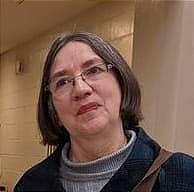
Hello! I'm a sociologist with a deep interest in problems and issues arising from social inequality. I work in the interdisciplinary spaces bounded by sociology, politics, and law. I love teaching, and although I started teaching in the era of chalk and chalkboards, I now enjoy exploring the power of the new online learning technologies. My courses and teaching content are increasingly available online. When not writing or teaching, I chair a lively Interdisciplinary Studies department at Lakehead University and serve as the Assistant Dean of Social Sciences and Humanities at Lakehead's fast-growing Orillia campus.
My work has been published in many different journals, including the Canadian Review of Sociology, Sociology, the British Journal of Sociology, and the Asian Journal of Social Sciences. I've supervised over 35 graduate students who have pursued professional careers in academia and public service.
My latest book, Issues in Canadian Law and Society, was co-written with Zöe Sebastien and published by the wonderful people at Oxford University Press. We wrote this book to spark curiosity around how law and society intersect—showing how today's Canadian challenges mirror global agendas. To bring these concepts to life, every chapter highlights an inspiring Canadian changemaker making a real difference, complete with actionable insights into careers where readers can tackle these issues head-on.
My second last book, The Right to be Rural, is a collection edited by Karen Foster and myself and published by the wonderful people at the University of Alberta Press. Our goal for this book was to direct social change and action that creates more robust, more resilient rural communities built around values of equity, inclusion, and sustainability by challenging the authors to understand contemporary developments in rural communities through a framework of rights. Case studies were organized using three themes: (i) the relevance, nature, and meaning of rural rights; (ii) the tension between equity and market development; and (iii) rural community-based strategic actions.